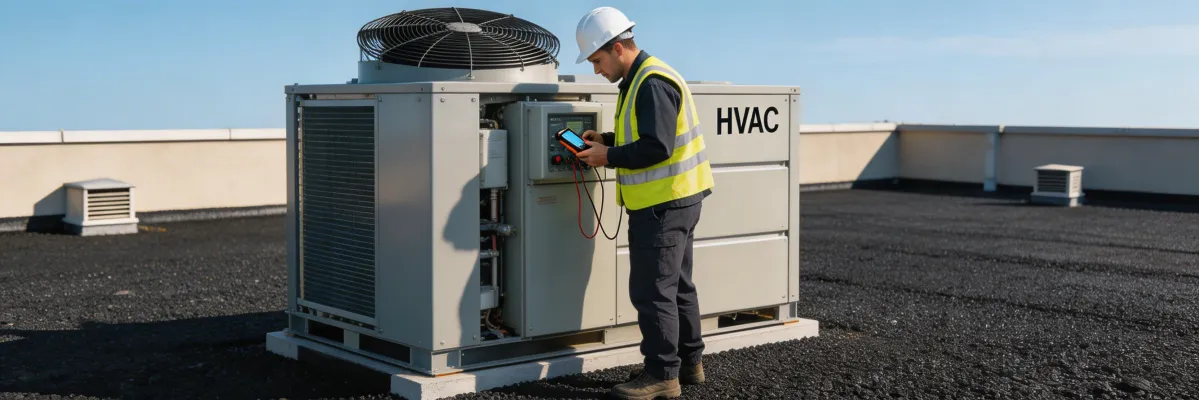
Every project receives the same standard of engineering rigor, regardless of scale or geography.
Load calculations, equipment selection, ductwork design, and piping layout. Our engineers use ASHRAE-standard methods to right-size every system, avoiding the 20-40% oversizing common in the industry.
Factory-certified installation crews handle equipment placement, electrical connections, refrigerant charging, and system commissioning. Every installation includes a 72-hour performance verification period.
Quarterly inspection programs covering filter replacement, coil cleaning, refrigerant level checks, electrical connection tightening, and vibration analysis to catch issues before they cause downtime.
Round-the-clock emergency support with an average dispatch time under 4 hours. Our technicians carry common replacement parts including compressors, contactors, and control boards for faster first-visit resolution.
Comprehensive energy audits measuring actual COP, EER, and part-load performance against rated specifications. We identify opportunities for VFD retrofits, economizer integration, and heat recovery.
IoT-connected sensors provide real-time visibility into system health, energy consumption, and fault conditions. Anomaly detection algorithms alert our service team before critical failures occur.
A structured approach ensures every project is delivered on time, within budget, and to specification.
On-site survey of building envelope, existing systems, and operational requirements.
Detailed equipment specification, cost breakdown, and projected energy savings analysis.
Coordinated installation, testing, and commissioning with minimal disruption to operations.
Preventive maintenance program, remote monitoring setup, and dedicated account management.
Transparent performance boundaries help you plan for your specific climate and application.
Air-source heat pumps are rated for outdoor ambient temperatures from -15 degrees C to +52 degrees C. COP degrades below -5 degrees C ambient, and supplemental heating may be required below -10 degrees C in heating mode.
Air-cooled equipment capacity is derated by approximately 3% per 300 m (1,000 ft) above sea level due to reduced air density. Installations above 2,000 m require custom fan and coil configurations.
Propane (R-290) units are subject to IEC 60335-2-40 charge limits (typically 150 g for occupied spaces), restricting their use to smaller capacity systems below approximately 20 kW without additional safety measures.
Rooftop installations require crane access for compressor replacement. Units in corrosive coastal or industrial atmospheres need coil coatings and shortened maintenance intervals (quarterly instead of semi-annual).
Our service team is ready to support your facility. Contact us for a maintenance quote or emergency assistance.
Schedule a Service Visit